Based on my experiences in digitalization, UX, and mobile over two decades, I have created a suite of tools and models to help you make the right choices – end-to-end through the design, development, and delivery process.
As suggested below, the initial strategy work covers the entire Ecosystem of Apps, while the following five stages of App
development are on a per-App basis. Red dots indicate go/no-go gates between stages
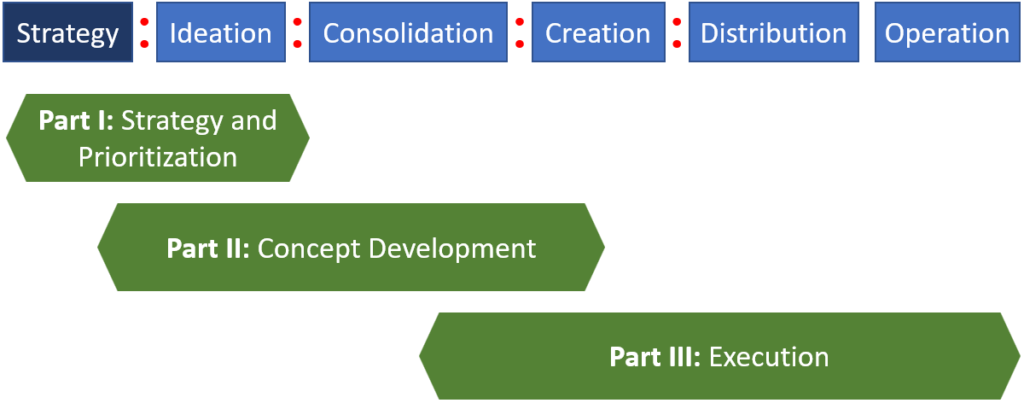
Indicated in green above, the three parts of the book cover three broad phases:
Part I: Strategy and Prioritization
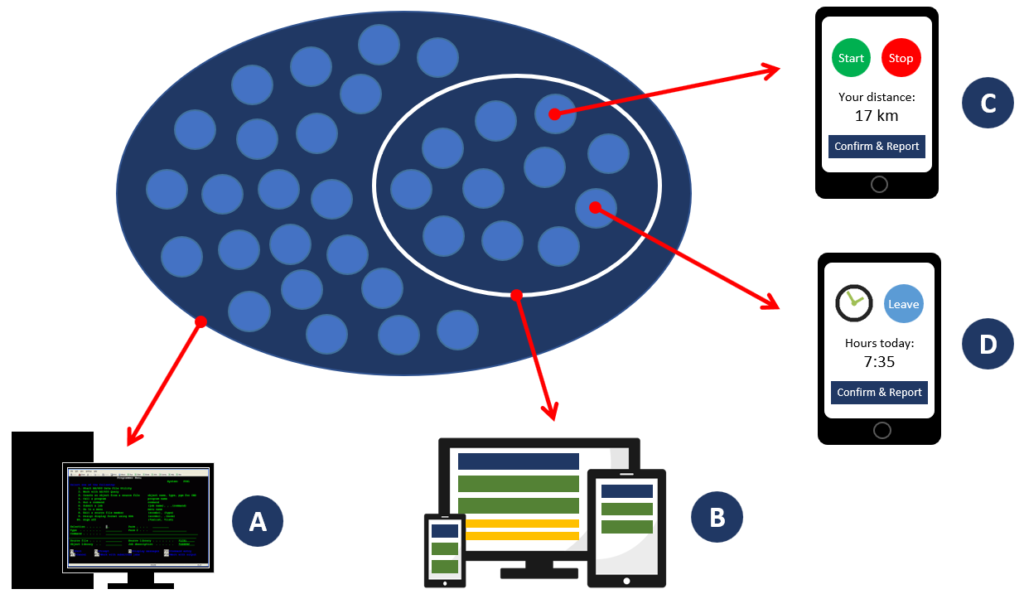
Before doing anything, you must consider why you want to create a mobile App in the first place: Is there a genuine need for a mobile solution with the targeted audience ? Where can mobile make a tangible difference to your business ? A key element in your mobile strategy will be designing your Digital Ecosystem: How many mobile solutions (Apps or web) should you offer, what should each of them do, and how do they connect to, and interplay with, your “large screen” solutions ?
Part II: Concept Development
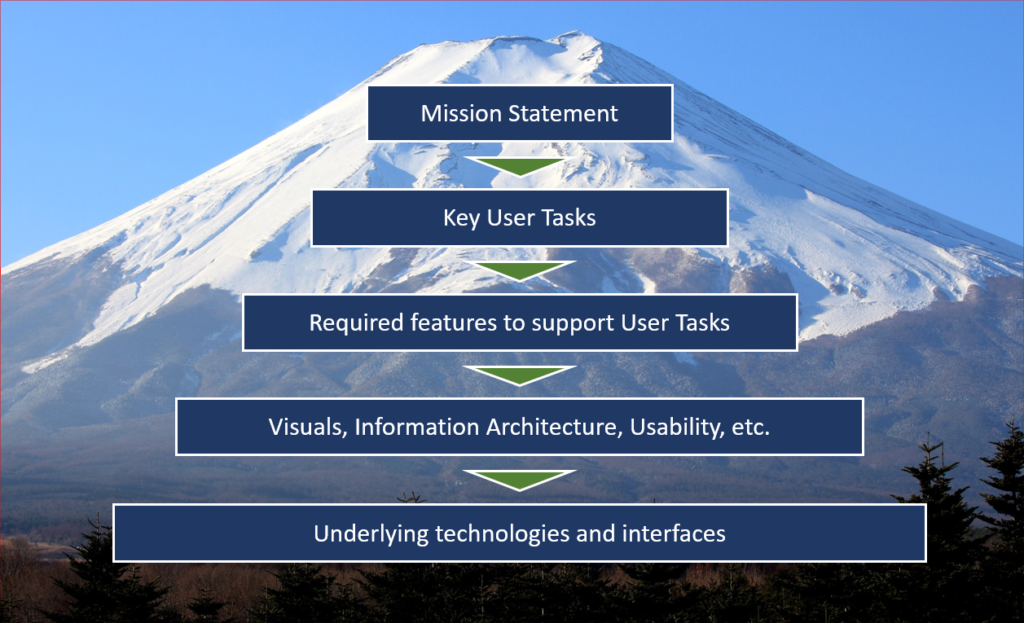
Once you have a fairly solid idea about which Apps should be part of your digital ecosystem, and their individual purpose and target audience, you can start working on each App in terms of feature set, information architecture, and functional design. At this stage, you must dig even deeper into the everyday lives of users, ensuring that you support the User Tasks most relevant for mobile devices in a complete and coherent manner. A key model in this context is the Application Mountain, which will help you stay focused on your users and their mobile experience, rather than technologies.
This will also help you find the Minimum Viable Product (MVP) in your new App – starting with a small-ish solution first and adding more features later will not only minimize the risk of failure, but also increase the likelihood of success of your App
Part III: Execution
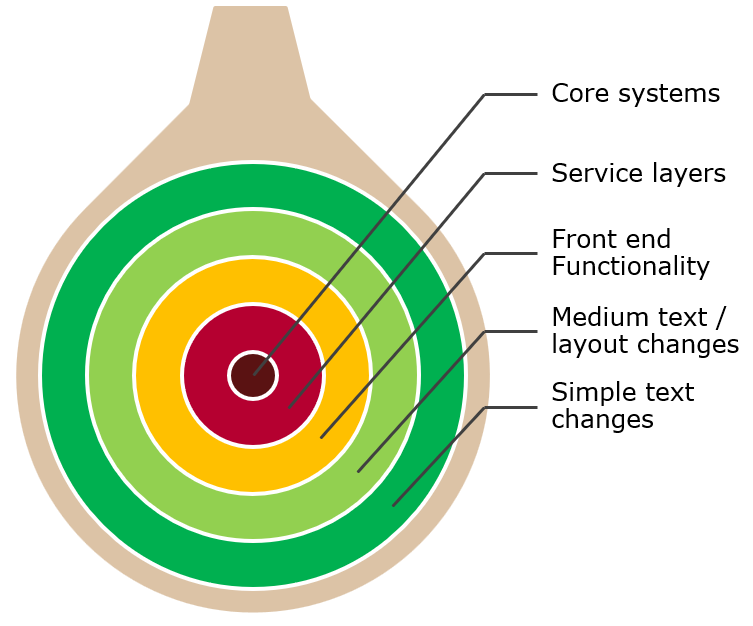
With a solid (and user-validated) concept in place, the next step is getting your App to market. Plenty of important decisions must be made here as well, including how to ensure that your App successfully reaches the intended users. Of absolute essence is setting aside a budget for post-release development, so you can analyze user behaviour and adjust your App accordingly, after you have brought the first version to market. Designing your App according to the Onion Governance model will ensure post-release flexibility, allowing you to act quickly
The book contains a total of 16 models like the ones mentioned above. The R.E.D. Scale for Digitization and Digitalization in particular has been a popular tool among my colleagues over the years.
338 pages in full colour – 6×9 inches. Available as hardcover (in Denmark), softcover (rest of the World) or e-book.
Table of Contents
Introduction: Be Relevant or Be Gone
Part I: Strategy and Prioritization
1 – A Brief History: The Three Eras of Mobile
2 – The Core Strategy: Mobile Where It Matters
3 – Elements of the Device Ecosystem
4 – The Bigger Picture: The Device Matrix
5 – Single-App Strategy or Multiple Apps ?
6 – Designing an Ecosystem for Your Users
7 – Outlines of a Business Case
Part II: Concept Development
8 – The Five-Stage Development Model: Stage 1 and 2
9 – The RED Scale for Digitization and Digitalization
10 – The Application Mountain
11 – The “Minimum Viable Product” Approach
12 – Working with Push Notifications and Permissions
13 – Validate your Concept with Users
14 – Laying Out the Master Plan and Budget
Part III: Execution
15 – The Five-Stage Development Model: Stage 3, 4, and 5
16 – How to Approach Pixel-Level Design
17 – App Icons and Naming
18 – Have a Development Strategy
19 – User Management and Access Control
20 – Validate your Design with Users Once More
21 – Understanding User Behaviour: Analytics
22 – Distribution to Users
23 – Post-Release: Unavoidable Maintenance
24 – Post-Release: Business Optimization
25 – Updating, Decommissioning, and Merging Apps
26 – Summary and Reflections
Bibliography
Appendix: Index of Models